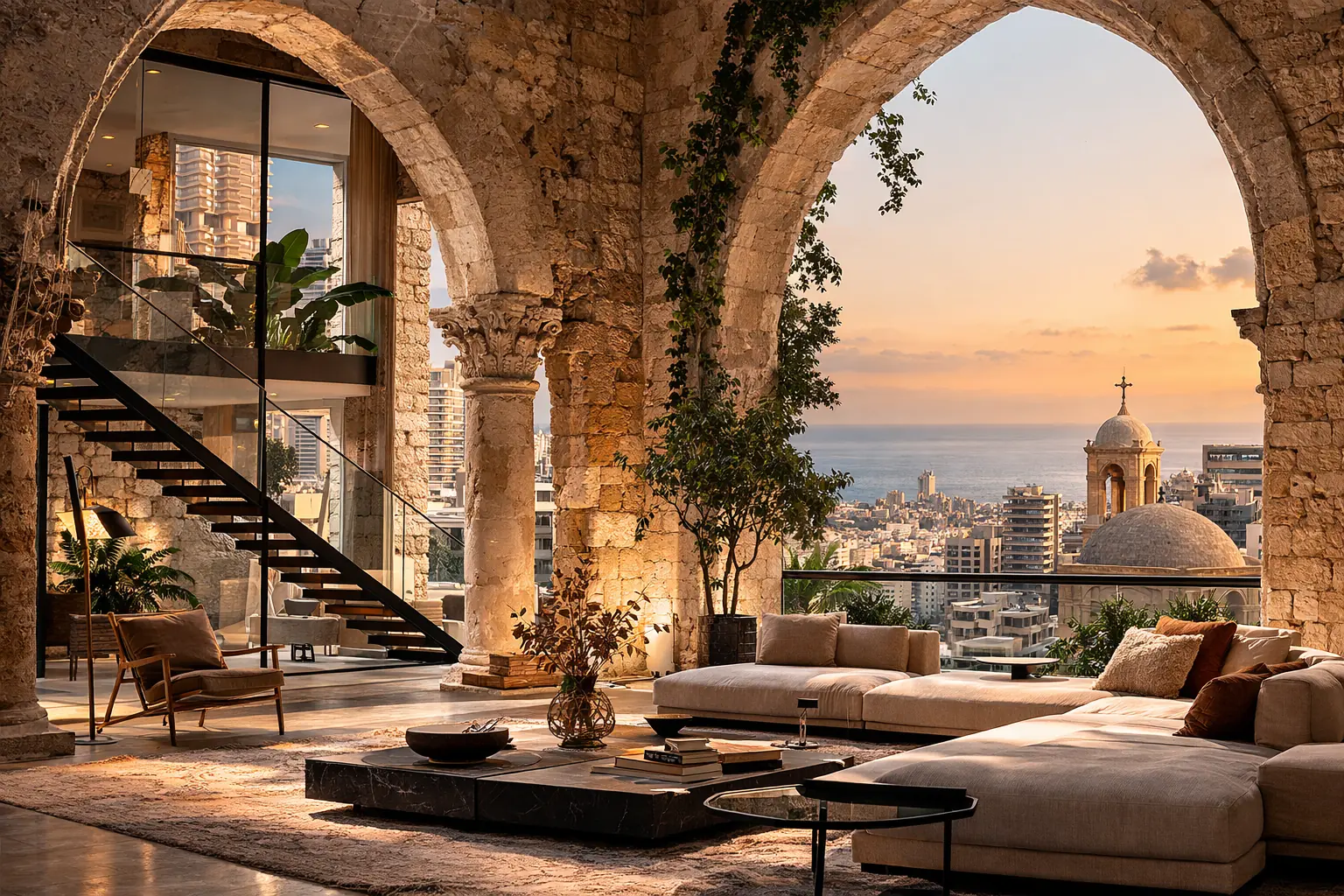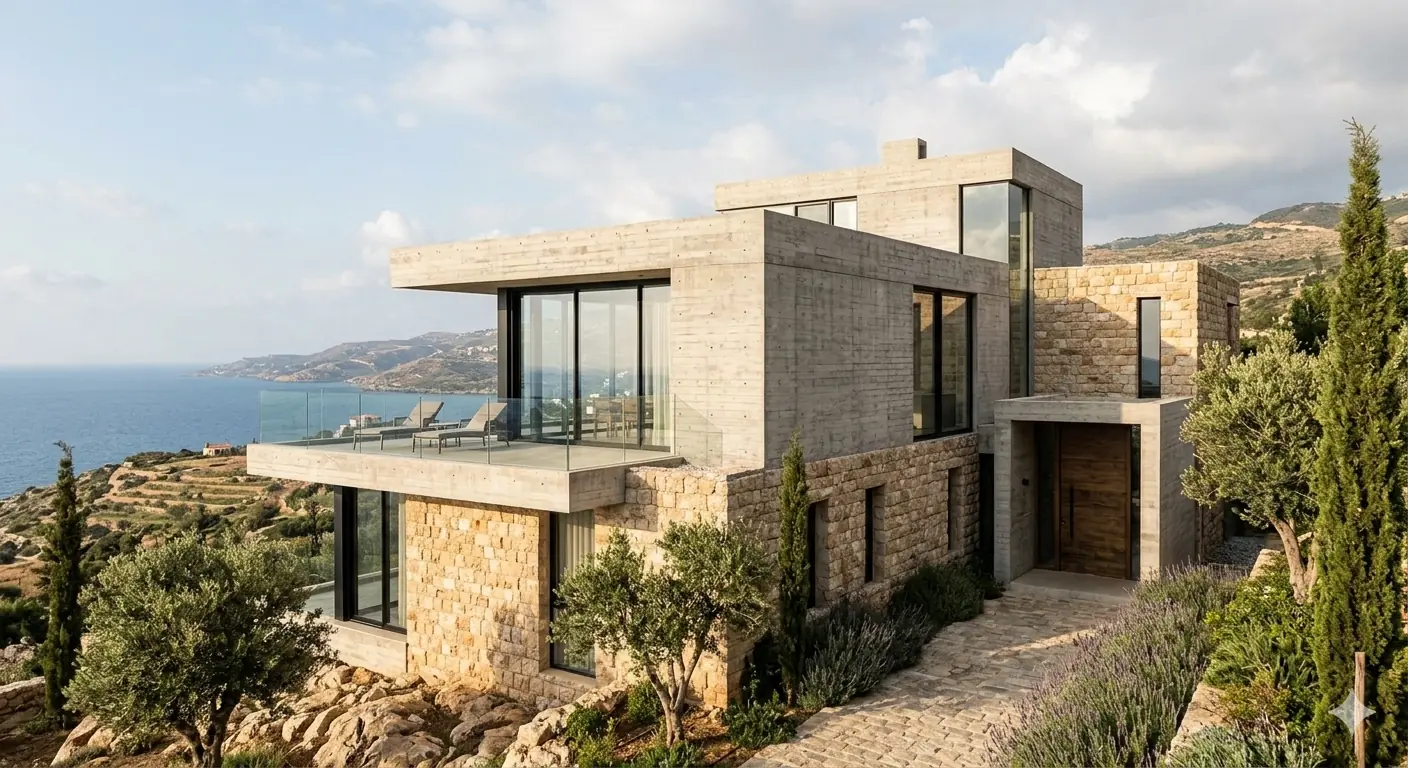
Drive thirty minutes north of Beirut and the coastline gives way to something entirely different. The air thins, the temperature drops, and the landscape transforms into rugged limestone plateaus dotted with cedar groves. This is Kesrouan — home to Faraya, Fakra, and Kfardebian — and for decades it has been Lebanon's mountain playground. But the architecture that defines it has long been stuck in an identity borrowed from another continent.
For years, the default mountain home in Lebanon was a carbon copy of something you'd find in Zermatt or Chamonix. Steep A-frame roofs, heavy timber cladding, decorative shutters — the "Swiss chalet" became the default vocabulary. It was charming in its own way, but it never quite belonged. The Lebanese mountains are not the Alps. The light is different. The stone is different. The way people live in these homes — splitting time between coast and summit, hosting extended family, spending summer evenings on wide terraces — is fundamentally different.
The terrain as blueprint
A new wave of architects is approaching mountain design from a radically different starting point: the land itself. Instead of importing a European template, they study the topography, the prevailing winds, the way snow drifts against natural rock formations, and the quality of the high-altitude Mediterranean light. The results are striking — monolithic forms that emerge from the hillside rather than sitting awkwardly on top of it.
This shift is not just aesthetic; it's practical. The Lebanese mountain climate is harsh — cold winters with heavy snowfall followed by surprisingly hot summers. A design rooted in the actual conditions, rather than in a romanticized alpine fantasy, performs better. South-facing skylights that warm interiors in winter. Sliding glass walls that transform a living room into an open terrace come June. Stone cladding sourced from local quarries that weathers naturally and requires almost no maintenance.
Local materials, global ambition
One of the most exciting developments is the revival of locally sourced materials. Agglomerate tiles manufactured in Lebanon's mountain villages, rough-hewn limestone from Kesrouan quarries, and locally produced concrete — these are being used not as budget compromises but as deliberate design choices. There is a growing understanding that authenticity is not about mimicking tradition but about building honestly with what the land provides.
The best mountain homes don't compete with the landscape — they complete it. The mountain was here first; our job is to add to it, not fight it.
This philosophy is evident in projects where buildings are half-buried into hillsides, where green roofs blend with the surrounding meadows, and where retaining walls double as sculptural elements. The result is architecture that feels inevitable — as if it was always meant to be there.
Beyond the weekend escape
Perhaps the biggest shift is in how these homes are being used. The traditional mountain chalet was a weekend or seasonal escape — closed for half the year, opened sporadically. But a younger generation of Lebanese homeowners is rethinking that model. Remote work, better roads, and a desire for space and quiet are turning mountain homes into primary or semi-primary residences.
This changes everything about the design brief. A seasonal cabin can get away with minimal insulation and a rustic kitchen. A year-round home needs proper thermal performance, home offices with reliable connectivity, open-plan living that adapts to daily life, and outdoor spaces that work in every season. The architects responding to this shift are creating homes that are as sophisticated as any Beirut apartment — but with views of snow-capped peaks instead of city skyline.
What comes next
The Lebanese mountain architecture scene is at an inflection point. The old Swiss chalet template is fading, replaced by something more honest, more rooted, and frankly more exciting. The best new mountain homes being built across Faraya, Fakra, and beyond are proving that you don't need to borrow someone else's architectural language to create something beautiful. Sometimes the most powerful design move is simply to listen to the mountain — and build what it asks for.
At Alain Azar Architect, mountain residential design has been a core focus since 2018. Every project in the Kesrouan region starts with the same question: what does this specific piece of land want to become? The answer is never the same twice, and that's exactly the point.