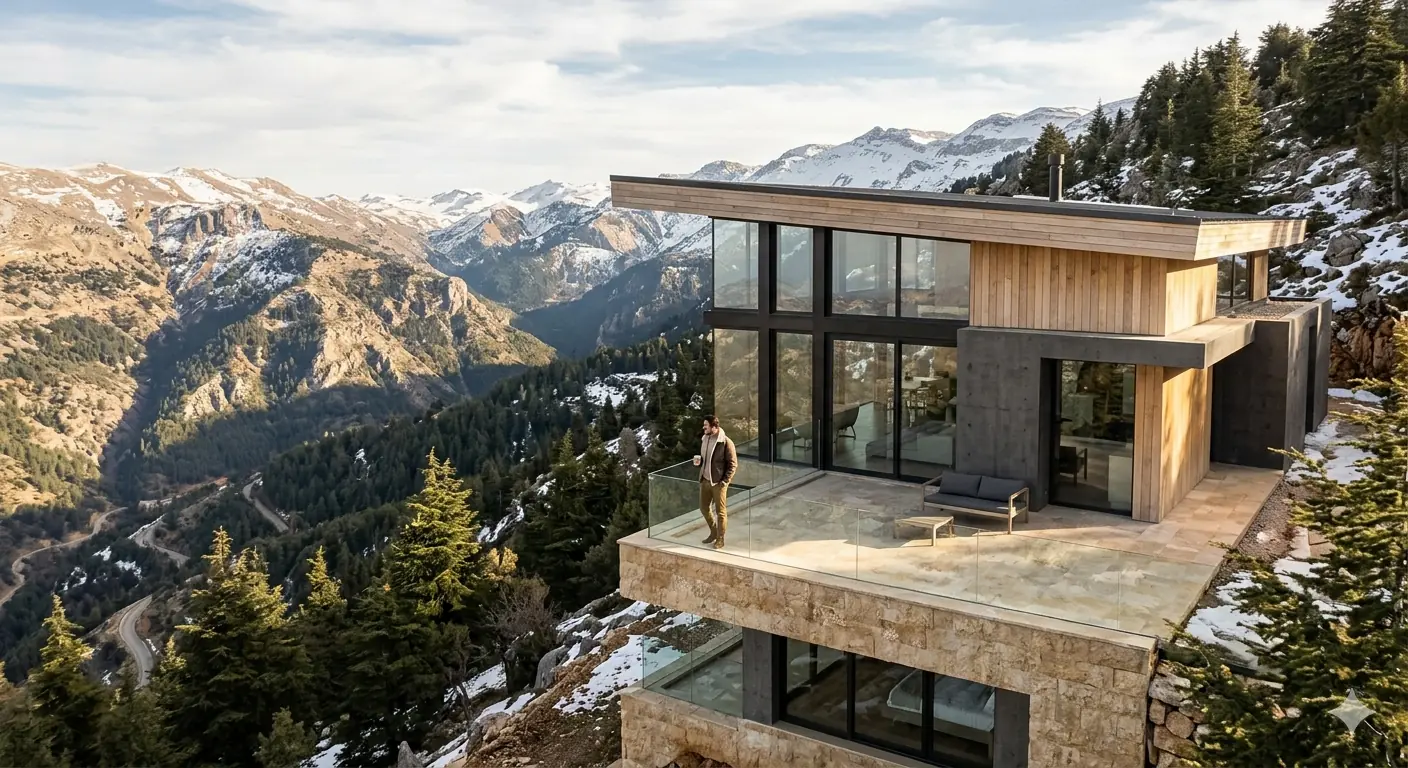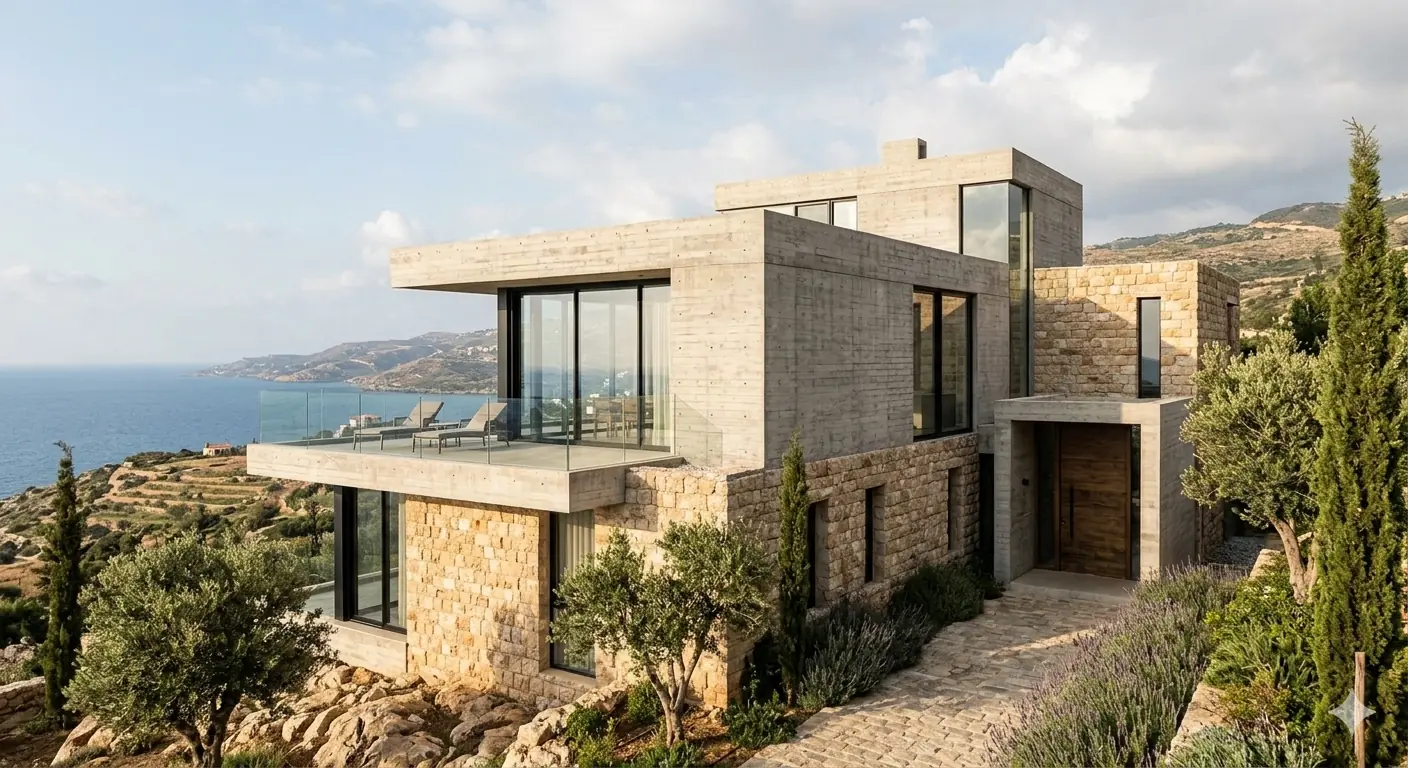
Walk through any neighbourhood in Beirut — Gemmayzeh, Achrafieh, Mar Mikhael — and you'll notice a tension that defines the city's character. Elegant limestone facades with triple-arched windows stand shoulder-to-shoulder with glass-and-steel towers. Ottoman-era courtyards hide behind construction scaffolding. It's a city where every block tells the story of a different century, often clumsily, sometimes beautifully.
For Lebanese architects, these heritage buildings present both a challenge and an extraordinary opportunity. They're fragile — many damaged by decades of conflict, neglect, and the catastrophic 2020 port explosion. But they're also irreplaceable. Each one carries architectural DNA that modern design can't replicate from scratch: the hand-carved sandstone lintels, the proportions of rooms designed for natural cross-ventilation, the way a central hall home organizes space around light and air.
The central hall reimagined
The Lebanese central hall house — that iconic plan with a grand central room flanked by smaller spaces on either side — is perhaps the country's greatest contribution to residential architecture. Developed during the Ottoman period and refined under the French mandate, its proportions are remarkably modern: open, flexible, and centred on communal living.
A growing number of renovation projects are rediscovering this layout not as a museum piece but as a living template. Architects are stripping away decades of ad-hoc partitions to reveal the original generous proportions, then layering in contemporary elements — floating steel mezzanines, glass partitions that preserve sightlines, and modern kitchens that slide seamlessly into the historic fabric. The result is something neither old nor new, but a compelling third thing entirely.
Respecting the scars
One of the most thoughtful developments in Lebanese heritage architecture is the decision to not erase the past. Bullet impacts in stone walls, blast marks on facades, patched-over damage from decades of conflict — these marks are part of the building's story. The most sensitive restoration projects preserve these traces rather than plastering over them, creating an honest dialogue between the building's original intent and everything it has survived since.
A building that has survived what Beirut has survived deserves to show its history, not hide it. Restoration isn't about going back in time — it's about carrying everything forward.
This approach resonates deeply in a city where collective memory is complicated. Architecture becomes a form of witness — the walls themselves hold the narrative that official records sometimes don't. Preserving these layers while making the space functional and beautiful for contemporary life is among the most difficult things an architect can be asked to do, and among the most rewarding.
The economics of preservation
Heritage renovation in Lebanon has never been straightforward from a financial perspective. The country lacks a comprehensive framework for protecting historic buildings, and property economics often favour demolition and high-rise replacement. Add the financial crisis that has gripped Lebanon since 2019, and the equation becomes even harder.
Yet against all odds, a quiet movement of preservation-minded developers, architects, and cultural organizations is making it work. Creative financing, adaptive reuse models that transform heritage homes into boutique hospitality or co-working spaces, and international preservation grants are all contributing to a small but meaningful wave of heritage renovation.
What heritage teaches new design
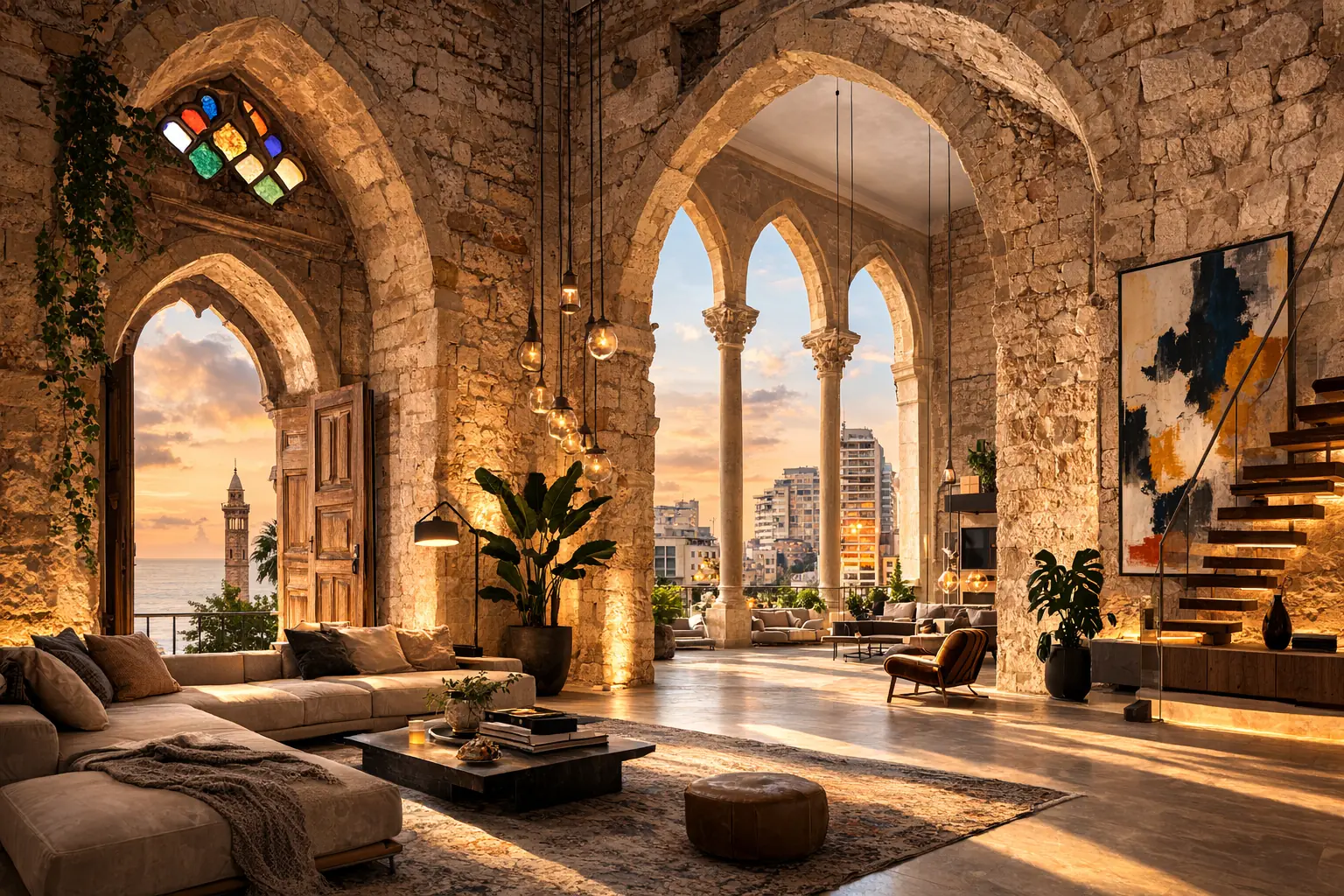
Perhaps the most unexpected benefit of this heritage moment is what it's teaching architects about new construction. The passive cooling strategies embedded in Ottoman-era homes, the material honesty of exposed stone and lime plaster, the proportions that create rooms that feel effortlessly generous — these are lessons that apply directly to contemporary residential design.
At Alain Azar Architect, we've found that our heritage renovation work directly informs our new-build projects. The principle of designing with light and air at the centre, of using honest local materials, of creating spaces that feel generous without being wasteful — these aren't nostalgic impulses. They're the foundations of good architecture in any era. Beirut's old buildings aren't just worth saving for what they are. They're worth studying for what they can still teach us.