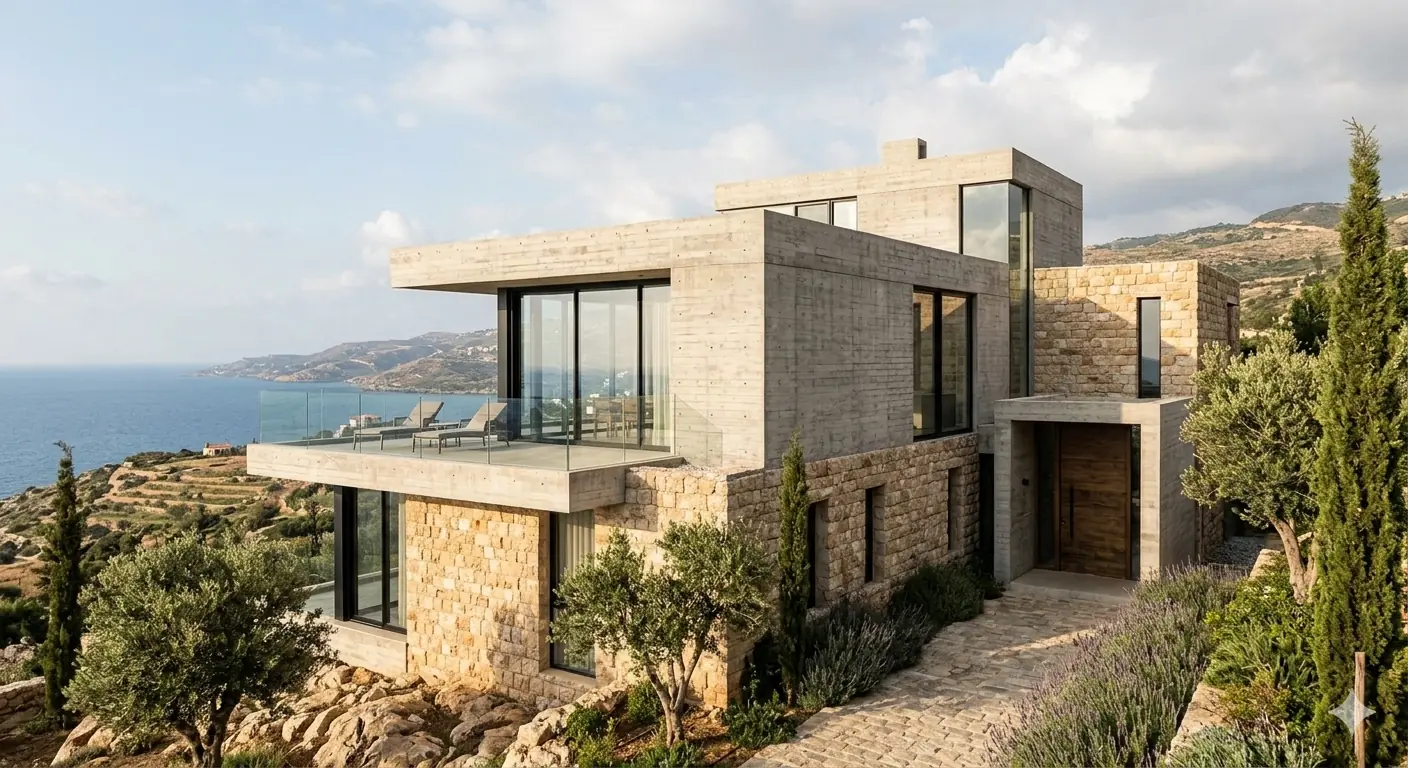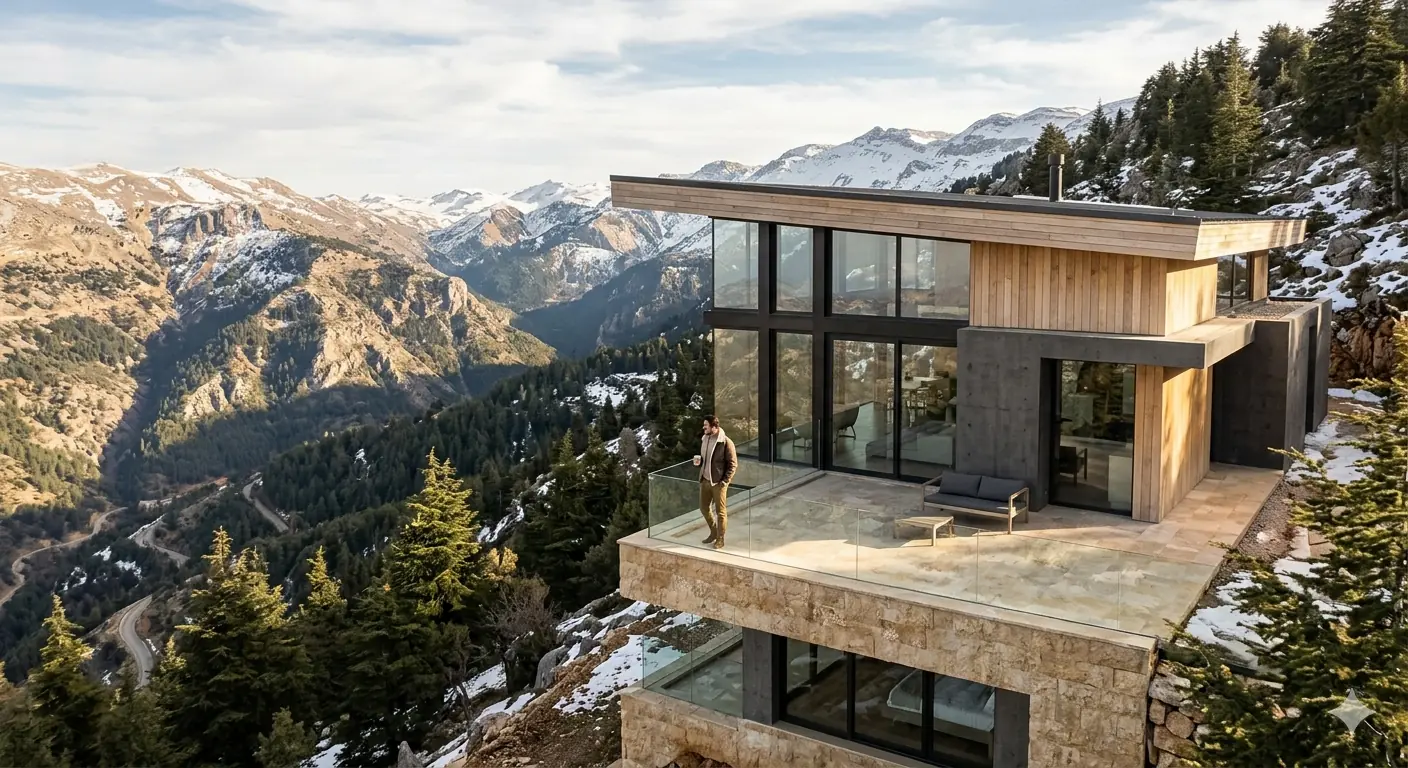
Minimalism in architecture is often perceived as a visual reduction of form. In reality, it represents a disciplined approach to design rooted in clarity, precision, and intentionality. Rather than eliminating elements arbitrarily, minimalist architecture refines space to its essential components: proportion, light, material, and spatial balance.
Less is more: the legacy of Mies van der Rohe
This philosophy draws from the legacy of Ludwig Mies van der Rohe, whose principle "less is more" emphasized structural honesty and clarity of form. In contemporary residential architecture, minimalism evolves beyond simplicity into a refined architectural language where restraint allows the fundamental qualities of space to emerge.
Architecture in dialogue with landscape
Minimalist architecture also establishes a strong dialogue with its surrounding environment. Instead of dominating the landscape, the architecture frames and enhances it. In mountainous contexts, horizontal volumes often follow the terrain while natural stone anchors the structure to the site. Glass façades open interiors toward distant views, dissolving the boundary between interior and exterior space. This relationship between architecture and nature echoes ideas explored by Tadao Ando, whose work demonstrates how geometry, light, and landscape can create powerful spatial experiences.
Materials as the primary medium of expression
In the absence of decorative excess, materials become the primary medium of architectural expression. Natural stone, architectural concrete, warm timber, and refined metal elements are selected for their authenticity and tactile qualities. Carefully composed material combinations introduce warmth and depth while maintaining the precision of minimalist geometry. This sensitivity to materiality reflects the philosophy of Peter Zumthor, whose architecture demonstrates how atmosphere and tactile surfaces can transform restrained spaces into emotionally engaging environments.
When forms are simplified and ornament is removed, every material choice becomes a statement. The wall is no longer background — it is the architecture.
Proportion, light, and spatial harmony
When architectural forms are simplified, proportion becomes essential. The balance between solid and void, transparency and mass, light and shadow defines the spatial harmony of the design. Through disciplined composition and careful control of natural and artificial light, minimalist architecture achieves clarity without sacrificing richness.
A timeless architectural presence
Ultimately, refined minimalism seeks to create architecture that transcends temporary trends. By focusing on fundamental principles — clarity of form, honest materials, balanced proportions, and integration with landscape — architecture can achieve a timeless presence. Through this approach, minimalist spaces become both serene and expressive, offering environments that remain sophisticated and meaningful across generations.